Heather Moyer's office used to be her basement. A concrete floor, a folding table, one phone line, and the kind of quiet that makes you listen to yourself think. That's where HNM Systems started in 2011—not in a co-working space with exposed brick and kombucha on tap, but in the bottom floor of a townhouse, in the unremarkable part of town where most people don't think about anything at all.
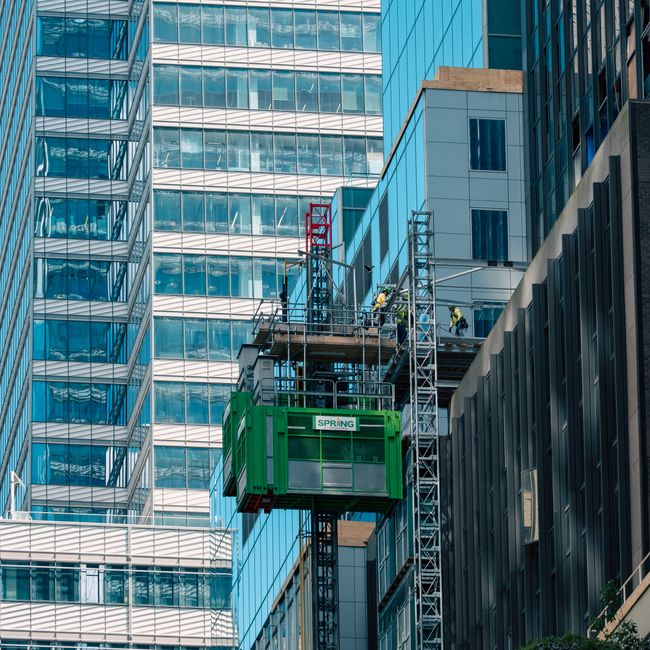
She was staffing the workers who build the telecom towers and fiber cables that let the rest of us stream and scroll and forget those towers exist. Infrastructure work. Nobody glamorizes it. Nobody writes think pieces about it. The men and women who climb those towers in the cold, who dig through rock and mud to lay the fiber that connects a hospital to its patients and a classroom to its students—they need jobs. They need people to find them those jobs. Heather saw that need and moved into the basement.
Fourteen years later, she runs a 27-state operation. She's targeting 50 percent year-over-year growth. She invented her own AI recruiting tool because the tools that existed weren't built for how infrastructure hiring actually works—weren't built for the complexity of matching skilled workers to jobs that demand both physical endurance and technical precision. Last year, Inc. magazine named her to its Female Founders 500 list.
But here's what matters more than the numbers: she built this while operating inside a system that wasn't built for her to win. The staffing industry runs on relationships and phone calls and a kind of old-school handshake trust. Male founders had decades of advantages in that world—easier access to capital, easier access to the networks that move money and contracts. Heather didn't have that. She had the basement and a refusal to wait for permission.
"I knew the business existed because I could see the gap," she said in an interview about the Inc. recognition. That clarity—that ability to see what others were missing—is what separates the founders who survive from the ones who don't.
She didn't invent a new industry. She didn't disrupt anything. She solved a real problem for real people doing essential work that infrastructure requires and that America depends on, even though nobody thinks about it until the internet goes down. She did it from the bottom floor, literally and figuratively, and she did it by building something that actually works—not something that sounds good at a pitch meeting.
The telecom towers are still climbing skyward. The fiber is still running underground through 27 states. The workers are still showing up. And now there's a woman making sure they have the jobs they need, running a company that makes the invisible visible—at least to the people who understand how America actually gets built.
Sometimes the most important work happens in the dark, where nobody's watching.